Sustainable Travel Deep Dive: Beyond Flights

Sustainable travel isn’t only about avoiding planes; it’s about designing low‑carbon trips from door to door and aligning household, travel, and lifestyle choices so total emissions fall year after year. This deep dive explores sustainable travel strategies that go beyond flights—covering trains and coaches, smarter driving, efficient stays, plant‑forward eating on the road, and itinerary planning—so every journey becomes part of a credible low‑carbon lifestyle.
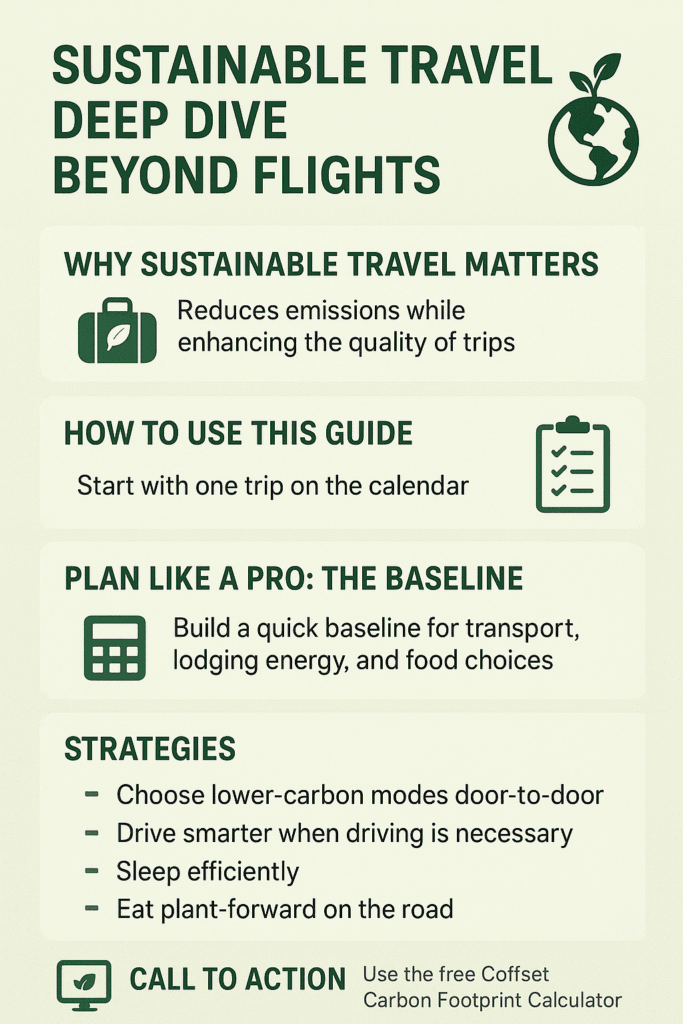
Table of Contents
Why sustainable travel matters
Sustainable travel reduces emissions while enhancing the quality of trips: fewer rushed transfers, more time immersed in place, and stronger support for local communities. By pairing mode shifts with thoughtful accommodation, food, and packing choices, it’s possible to cut a trip’s carbon footprint significantly without sacrificing experience.
How to use this guide
Start with one trip on the calendar. Apply the numbered sections below to re‑plan certain legs, optimize local mobility, and tune lodging routines. Then tally results and offset residuals through verified projects after reduction. Repeat for each itinerary to build a durable, sustainable travel practice.
Plan like a pro: the baseline
Build a quick baseline for transport, lodging energy, and food‑related choices. Use a calculator that breaks down household, travel, and lifestyle emissions so sustainable travel decisions can be prioritized where they matter most. Re‑run after the trip to measure actuals and improve the next itinerary.
1) Choose lower‑carbon modes door‑to‑door
- Prioritize electrified rail for sub‑1,000 km routes.
- Use coaches for corridor links where rail is limited.
- For multi‑city trips, cluster destinations regionally to minimize hops.
- When flying is essential, book nonstop economy and pack light.
2) Drive smarter when driving is necessary
- Carpool to raise occupancy and drop emissions per person.
- Rent efficient or electric vehicles where charging is available.
- Keep tires inflated, speeds moderate, and routes planned to reduce fuel use.
- Combine errands and choose hotels with EV charging or easy transit access.
3) Slow travel, fewer transfers
- Fewer locations, longer stays reduce legs and logistics.
- Replace several short jaunts with one extended regional trip.
- Shift from “checklist tourism” to deeper, place‑based experiences.
4) Sleep efficiently
- Prefer lodgings that disclose efficiency, renewable electricity, and conservation practices.
- Use thermostat moderation, short showers, and towel/linen reuse.
- If possible, book stays near transit hubs to avoid extra car rides.
5) Eat plant‑forward on the road
- Choose plant‑rich meals most days; reserve animal protein for specific occasions.
- Favor local, seasonal dishes; avoid food waste with realistic portioning.
- Pack light reusables (bottle, utensils, tote) to reduce disposables.
6) Pack light, digitize, and standardize
- A lighter bag reduces transport energy across modes.
- Digitize tickets and guides; share an itinerary document to avoid printed copies.
- Standardize packing lists to cut last‑minute purchases and waste.
7) Use local mobility smartly
- Walk first, then transit; keep ride‑hailing as a last resort.
- Rent bikes or e‑bikes for 1–10 km trips.
- Opt for regional transit passes; plan days around low‑carbon corridors.
8) Balance comfort and impact
- Aim for a sustainable travel “sweet spot”: reliable connections, enough flexibility, and lower carbon per kilometer.
- Book earlier to secure direct rail or coach options and better seats.
9) Measure, then offset
- After reductions, offset residual emissions with verified credits that are transparently retired.
- Document boundaries (which legs, dates), the reduction steps taken, and the credit retirement details.
Opinion: What actually moves the needle in sustainable travel
From practice, three moves reshape a trip’s carbon footprint more than anything else: swap one or two short‑haul flights for rail each year, slow down and stay longer in fewer places, and locate accommodations next to transit so local mobility is automatic. Everything else helps, but these three decisions consistently deliver the biggest reductions without harming the experience—often making it better.
Learn More
To take the next step on your low-carbon journey, try the free Coffset Carbon Footprint Calculator to establish a precise baseline and identify your top opportunities for impact. After reducing what you can, offset the rest with verified projects that accelerate climate solutions. Explore more of our resources to stay informed: What Is a Carbon Footprint?, What Is Carbon Offsetting?, Reduce vs Offset: Why Both Matter. Each guide helps you cut emissions credibly while building lasting habits for a net-zero future.
FAQs – Sustainable Travel Deep Dive
- How do I know if rail beats flying for my route?
Compare door‑to‑door time and emissions for electrified rail versus a nonstop flight. For sub‑1,000 km corridors, rail usually wins on emissions and is competitive on time once airport transfers and security are included. - Do small actions like packing light really matter?
Alone, packing light is modest, but combined with nonstop flights and fewer transfers it compounds—and it always improves the travel experience. - Are electric rentals always lower‑carbon?
Usually, especially on grids with a reasonable share of clean electricity. Still, carpooling and shorter distances often beat any vehicle swap—consider mode first, vehicle second. - How should I offset a trip responsibly?
Reduce first, then buy verified credits with transparent documentation and retirement records. Keep a simple log (legs covered, dates, credit serials) for future reference.
Sources
- How to reduce the carbon footprint of your travels: https://sustainabletravel.org/how-to-reduce-travel-carbon-footprint/
- Top 10 tips for sustainable travel: https://sustainabletravel.org/top-10-tips-for-sustainable-travel/
- Sustainable travel policy guide (business context): https://www.travelperk.com/guides/ways-businesses-can-reduce-carbon-footprint/sustainable-travel-policy/
- How to make business travel more sustainable: https://sustainabletravel.org/how-to-make-business-travel-more-sustainable/
- Household lifestyles and global emissions: https://climateadaptationplatform.com/how-household-lifestyles-can-cut-global-carbon-emissions/