Sustainable Food Systems: How Diet Impacts Carbon Footprint

How Diet Impacts Carbon Footprint? Diet has a powerful, measurable effect on personal and global emissions because food systems drive land use, energy, and methane outcomes from farm to fork and waste. Shifting toward plant‑forward patterns, cutting avoidable food waste, and choosing lower‑impact proteins can reduce household footprints substantially while supporting resilient, sustainable food systems when combined with supportive policies and better infrastructure. To quantify impact and plan changes alongside other lifestyle shifts, start with the free Coffset Carbon Footprint Calculator to baseline, reduce, and then only offset residuals transparently.
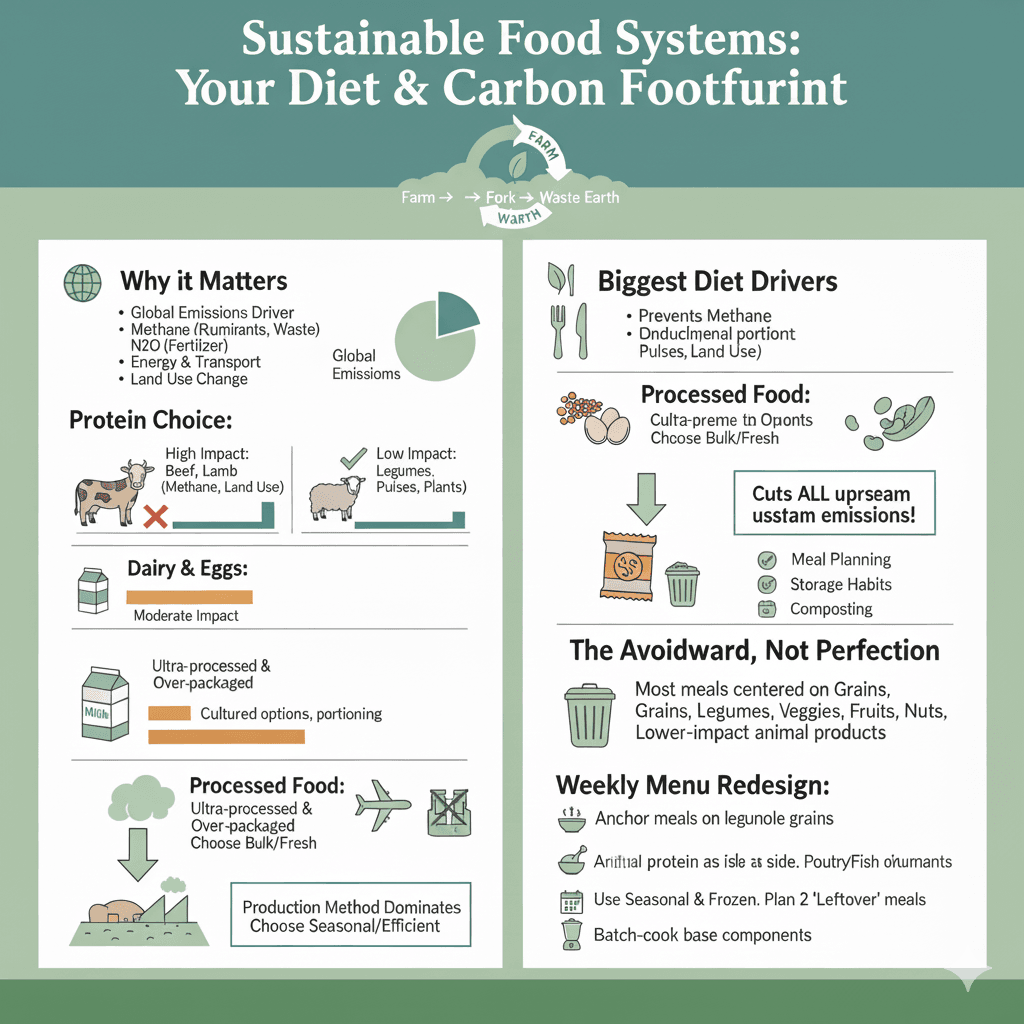
Table of Contents
Why food systems matter
Food systems contribute significant global emissions through enteric methane from ruminants, fertilizer‑related nitrous oxide, energy and transport, land‑use change, and waste‑related methane. Policy and pathway work highlight that dietary shifts, waste reduction, and sustainable production practices are essential complements to energy transition, ensuring net‑zero pathways remain feasible and socially beneficial UN climate basicsEU climate policy overview.
The biggest drivers in diet
- Protein choice: Ruminant meats (beef, lamb) have higher footprints due to methane and land‑use, while legumes, pulses, and many plant proteins are markedly lower.
- Dairy and eggs: Moderate impacts relative to beef but higher than most plant alternatives; cultured dairy choices and portioning matter.
- Ultra‑processed and over‑packaged foods: Upstream processing and packaging can add material and energy footprints; bulk and fresh alternatives can help when waste is managed.
- Food miles vs. production: Transport matters, but production method usually dominates; seasonal and efficiently produced items often beat long‑distance, high‑input options UN climate basicsEU climate policy overview.
Food waste: the avoidable tonne
Preventing avoidable food waste cuts methane from landfills and avoids all upstream production emissions embedded in discarded food. Behaviorally informed systems—meal planning, portioning, storage habits, and composting—deliver reliable reductions when paired with clear prompts and easy defaults in kitchens and purchasing apps UNFCCC beginner’s guideWRI behavior shift summary.
Plant‑forward, not perfection
A plant‑forward pattern means most meals center on grains, legumes, vegetables, fruits, nuts, and seeds, with smaller, occasional portions of animal products chosen for lower impact and welfare. This flexible approach maximizes adherence and still captures most of the emissions benefit, especially when combined with waste prevention and better cooking energy choices (e.g., induction on a cleaner grid) WRI behavior shift summaryUN climate basics.
How to redesign a weekly menu
- Anchor meals on legumes and whole grains; batch‑cook base components to reduce time and waste.
- Treat animal protein as a side; pick poultry or responsibly sourced fish over ruminant meats when included.
- Use seasonal produce and frozen staples to balance cost, nutrition, and waste.
- Plan two “creative leftover” meals weekly to clear the fridge before shopping UNFCCC beginner’s guideWRI behavior shift summary.
The role of consumer choice vs. policy
Individual choices add up faster and more durably when policy makes low‑carbon defaults cheaper and easier—through clear labeling, school and workplace food standards, waste‑prevention programs, and recycling/compost services. Carbon pricing, standards, and targeted investments support cleaner energy for farming, efficient logistics, and better waste systems, amplifying household efforts EU climate policy overviewUNDP climate dictionary.
Behavior science: make it automatic
- Defaults and positioning: Put plant‑based items first on menus and apps; make small portions the default, with opt‑ups available.
- Commitments and cues: Weekly pledges, calendar reminders, and visible lists reduce friction and maintain routines.
- Feedback with next steps: Track grocery waste and “tonnes avoided” with one‑click actions (e.g., freeze, repurpose, compost) Nudge meta‑analysisBehavior change tools (WRI).
Sourcing, labels, and trade‑offs
- Production systems: Regenerative practices, efficient irrigation, and low‑emission fertilizers can shrink footprints; third‑party certifications help, but read scopes and criteria.
- Seasonal and frozen: Seasonal often reduces inputs; frozen can slash waste when used strategically.
- Packaging: Focus first on preventing food waste; then favor recyclable/reusable formats where system infrastructure supports it EU climate policy overviewUN climate basics.
Eating out, traveling, and events
- Menus: Choose venues with clear plant‑forward options and portion flexibility; split or save portions to minimize waste.
- Travel: For short trips, choose rail‑served destinations and self‑catering with simple plant‑rich staples to avoid high‑waste dining.
- Events: Advocate for plant‑forward defaults, water refill stations, and food recovery programs UNFCCC beginner’s guideWRI behavior shift summary.
Opinion: The “3‑2‑1” food rule
Three plant‑forward dinners each week as non‑negotiable defaults, two waste‑prevention moves (meal plan + “use‑by” labels), and one flexible animal‑protein choice guided by impact and welfare. Run this for 12 weeks and track “tonnes avoided”; the combination of defaults, commitments, and feedback is what makes the habit stick.
Learn More
Explore practical next steps and foundational concepts in one place: start by testing scenarios with the free Coffset Carbon Footprint Calculator, then build fluency with our explainers What Is a Carbon Footprint?, What Is Carbon Offsetting?, and Reduce vs Offset: Why Both Matter. For more resources, visit the Coffset homepage, explore the Carbon Learning Center, or take action via Buy Carbon Credits.
FAQs – How Diet Impacts Carbon Footprint
- Which dietary changes lower emissions the most?
Shifting from ruminant meats to plant‑forward meals and cutting avoidable food waste typically deliver the largest, fastest reductions for households UN climate basicsUNFCCC beginner’s guide. - Do “food miles” matter more than production methods?
Production method usually dominates; long‑distance transport can add emissions, but efficient, seasonal production often outweighs distance effects in many categories EU climate policy overviewUN climate basics. - How can restaurants and workplaces help?
Make plant‑forward options the default, right‑size portions, provide clear labeling, and implement food recovery/compost programs to reduce waste at scale UNFCCC beginner’s guideWRI behavior shift summary.
Sources
- UN – What Is Climate Change? https://www.un.org/en/climatechange/what-is-climate-change
- European Commission – EU Climate Policy Explained: https://climate.ec.europa.eu/system/files/2017-02/eu_climate_policy_explained_en.pdf
- UNFCCC – Beginner’s Guide: https://unfccc.int/resource/docs/publications/beginner_en.pdf
- WRI – Behavioral shifts and enabling contexts (summary): https://sustainabilityonline.net/research/role-of-individual-actions-in-emissions-reduction-explored-in-new-wri-report/amp/
- PNAS – Effectiveness of nudging meta‑analysis: https://www.pnas.org/doi/10.1073/pnas.2107346118
- WRI – Behavior change tools for climate action: https://www.wri.org/insights/behavior-change-reduce-emissions-climate-plans
Put your knowledge into action
Calculate your footprint and offset instantly with verified credits.
Continue reading
12 Breakthroughs and Pitfalls: Sustainable Food & Agriculture Innovations
An evidence-based guide exploring 12 sustainable agriculture innovations that drive regenerative outcomes, reduce carbon emissions, and tackle climate challenges. Discover what works and where the pitfalls lie in modern farming solutions.
10 Smart Moves: Energy Storage and Home Carbon Reduction
Learn how to cut your home's carbon emissions with smart energy storage solutions like batteries and heat pump water heaters. Discover practical strategies to shift energy use to cleaner hours while earning VPP payments.
11 Myths, Traps, and Wins: Low‑Carbon Home Renovations — Techniques and Savings
Cut energy bills and reduce your carbon footprint with proven low-carbon home renovation strategies that avoid common myths and maximize both savings and sustainability.